
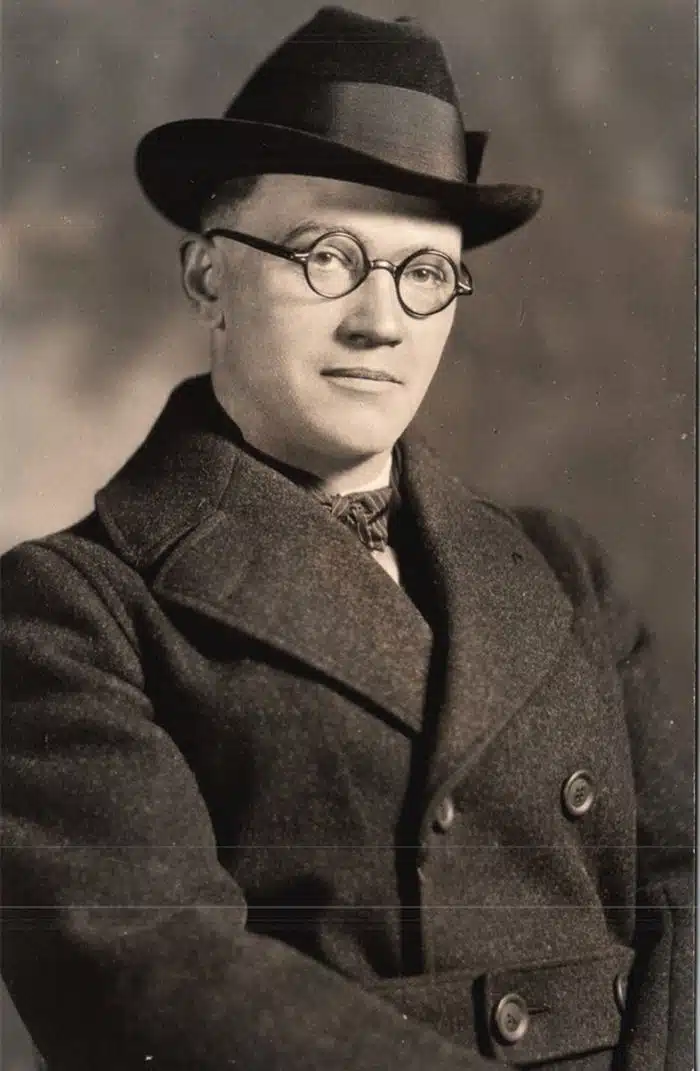
August Horch (October 12, 1868 – February 3, 1951) was a German engineer and automotive pioneer, as well as the founder of Audi, a giant in the automotive manufacturing industry.
I. Start in Blacksmithing and Machinery
Born on October 12, 1868, Horch was the son of a blacksmith in the village of Winningen on the Moselle River. Back then, no one could have imagined that he would one day become one of the most brilliant figures in automotive history. After primary school, he began an apprenticeship as a blacksmith. After passing his journeyman’s exam, he embarked on a journey. Over three years, he traveled through Austria-Hungary, Serbia, Bulgaria and other regions.
In 1890, the young technology enthusiast graduated from the Technical University of Mittweida (Saxony) with a degree in mechanical engineering and engine manufacturing. This was a significant social advancement he achieved through talent and curiosity. “At that time, my thirst for learning was insatiable,” he later recalled.

II. Transformation from Employee to Boss
His first job was designing marine engines at a shipyard in Rostock, followed by a move to Leipzig, where Horch designed internal combustion engines for torpedo boats. In October 1896, the foundation for his lifelong commitment to automotive engineering was laid. He became an employee of Benz & Cie in Mannheim, then the world’s largest automobile factory. Only four months later, automotive pioneer Karl Benz appointed him manager of the automobile manufacturing plant.
August Horch soon developed his own vision of the perfect car: above all, it should be more powerful and faster than existing models, with a top speed of 11 miles per hour. However, Mercedes had no room to realize his dreams, so in 1899, he struck out on his own. Together with cloth dealer Salli Herz, he founded “A. Horch & Cie” in Ehrenfeld, Cologne. Initially, the company mainly repaired automobile engines, but Horch focused on developing his first car.
His first patents included a commutator switch that significantly accelerated the ignition of automobile engines. Soon, Horch drove his self-made car for the first time. In essence, it was still a carriage-like vehicle similar to Benz’s first automobile. It had no doors or candle lamps, but was equipped with a friction clutch and universal joint for the first time.
Horch aimed to “only manufacture large, powerful and reliable cars no matter what.” However, his innovative luxury cars were too expensive, so Horch did not achieve commercial success. The search for new investors first took him to Reichenberg. In 1904, he moved to Zwickau, where he founded his own company—now a joint-stock company—pioneering the great Saxon tradition of automobile manufacturing.
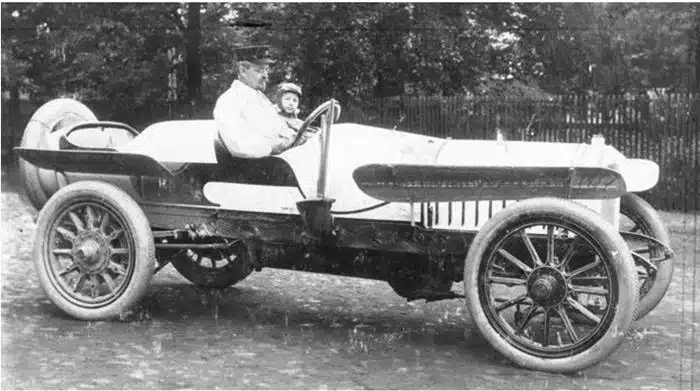
Eventually, Horch achieved a certain degree of success. These expensive but high-performance cars sold well, and Horch participated in many famous races driving his own vehicles (he never had a driver’s license). However, in 1909, dissatisfied shareholders demanded reforms in the company, partly due to the lack of racing success. Conflicts continued after Horch’s departure.
III. Horch’s Connection with Audi
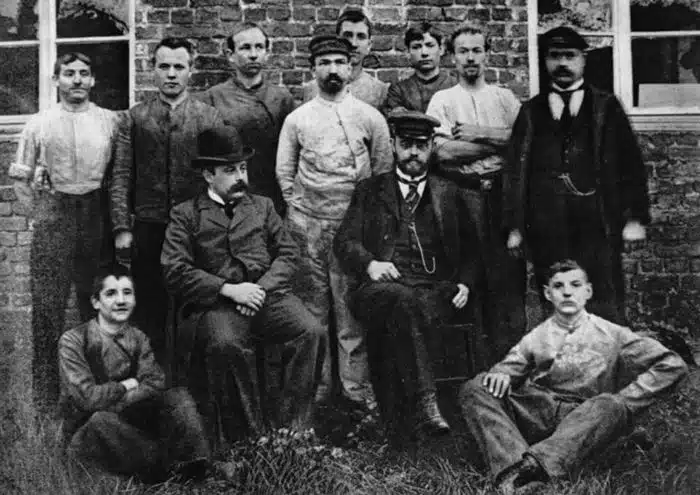
Horch immediately established a new automobile company in Zwickau. Once again, he named the company after himself: “August Horch Automobilwerke GmbH.” But this was not possible, as Horch AG insisted on its trademark rights and sued its founder. August Horch lost the lawsuit and had to find another company name.
At that time, the son of one of Horch’s business partners was studying Latin. The son came up with an ingenious idea: he translated the founder’s name into Latin—and “Audi” was born. From then on, August Horch often used the signature “Ihr Audi-Horch” (Your Audi Horch). Audi registered this signature as a word/graphic combined trademark for its products in 1998.
On August 24, 1910, the first Audi drove through the factory gates. The new company was a great success. Horch won many important races driving his Audi Type C, such as the 1914 Alpine Rally (in which he left Horch cars far behind). From then on, this model was known as the Alpensieger (“Alpine Victor”). Incidentally, Horch drove this winning car for another 15 years before donating it to the Deutsches Museum in Munich.
World War I forced Audi to manufacture armored vehicles and mortars instead of cars. After the war, Horch gradually withdrew from his role as an engineer. In 1923, he still introduced left-hand drive, which was later adopted almost worldwide. The use of light metals in engine construction, high-strength steel in gearbox production, and the introduction of central shift technology all trace back to Horch and Audi.
In the 1920s, Horch gradually withdrew from the automotive manufacturing industry, becoming a member of the supervisory board, working as a transportation expert in Berlin, and later even attempting chicken farming and winemaking. But these efforts were in vain, as he had no luck in his life as an entrepreneur.
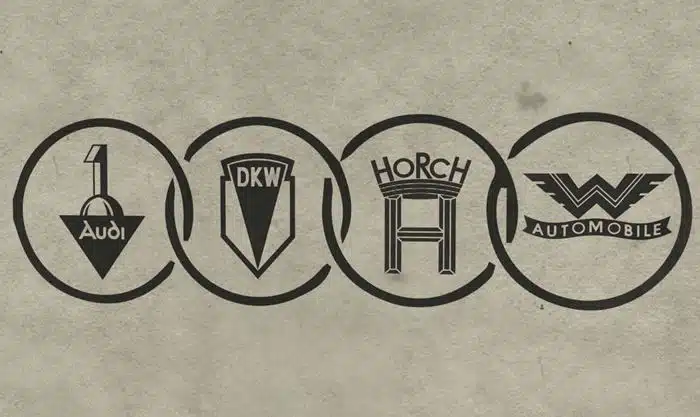
In the late 1920s, Audi also began to decline. In 1932, the consequences of the global economic crisis finally forced Audi and Horch to merge with small automobile and motorcycle manufacturer Zschopauer Motorenwerke (DKW) and automobile factory Siegmar der Wanderer-Werke. A new corporate group, “Auto-Union,” was established with its headquarters in Chemnitz, becoming Germany’s second-largest automobile manufacturer after Opel.
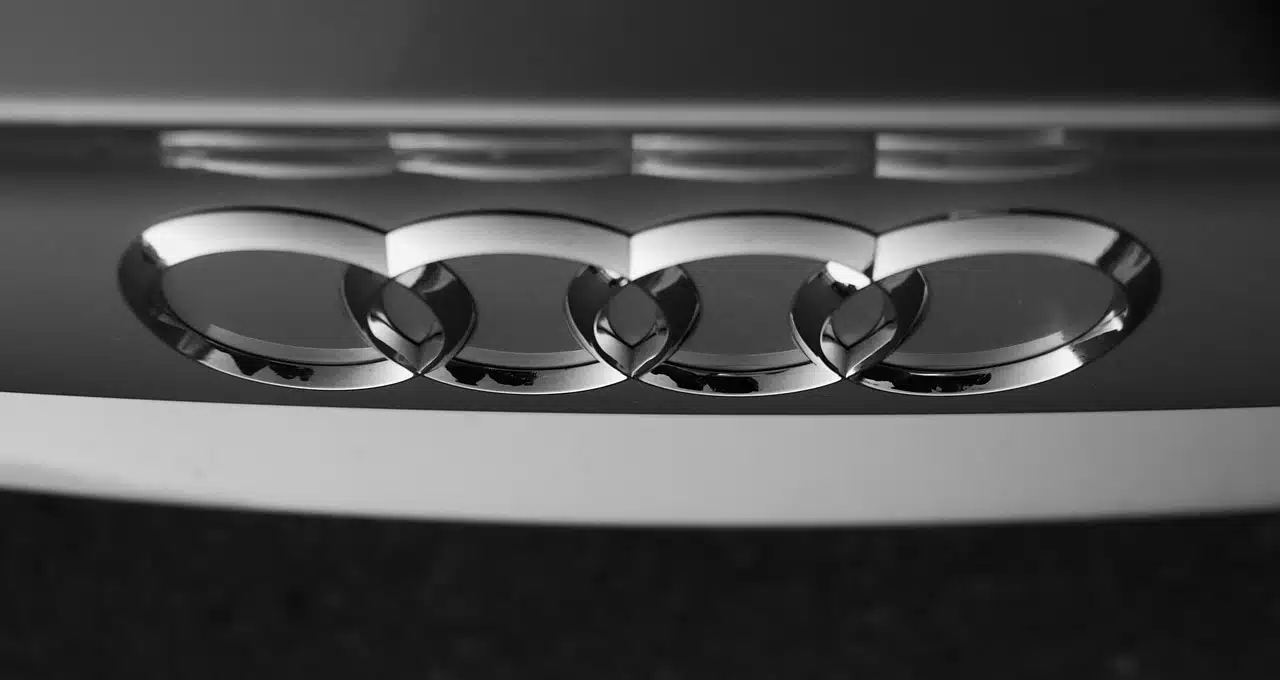
Its logo consisted of four interlocking rings, representing the merged partners. August Horch was elected to the supervisory board. The four independent brands continued to develop successfully. In particular, Horch became a profitable luxury brand in the 1930s. The elderly August Horch was hailed as a technical pioneer and wrote his memoirs titled “Ich baute Autos” (“I Built Cars”). Finally, World War II brought civilian automobile manufacturing to a standstill.
Horch lived to see the post-war reconstruction of Auto-Union in Ingolstadt before passing away on February 15, 1951, in Mühlberg am Main in Franconia, as an honorary citizen and honorary doctor with little wealth. The Audi brand (with Auto-Union’s four rings as its trademark) continued to exist after his death and achieved tremendous success as part of the Volkswagen Group starting from the late 1960s. Today, “Horch” exists only as a trademark name, owned by Audi.

In 2020, the company held 1,088 patents, making it one of Germany’s seven most active applicants. This would certainly have pleased August Horch, who spent his life wanting to build cars that were not only fast but also innovative.

FAQ
Who makes Audi?
Audi cars are made by Audi AG, a German automotive manufacturer headquartered in Ingolstadt, Bavaria. Audi AG is a wholly owned subsidiary of the Volkswagen Group and produces vehicles across nine production facilities worldwide. In everyday terms: if you own an Audi, it was engineered and manufactured by Audi AG, which is part of the broader VW Group family that also includes Volkswagen, Porsche, Lamborghini, and Bentley.
Where are Audi cars made?
Audi’s primary manufacturing plants are in Germany, with the main facility in Ingolstadt and a second large plant in Neckarsulm. Audi also operates production facilities through its divisions in Brussels, Mexico, Hungary, China, Brazil, India, Slovakia, and Spain. Most Audi models sold in the US and UK are assembled in Germany or Hungary.
What do the Audi 4 rings mean?
The four interlocking rings symbolize the merger of four previously independent automobile manufacturers on June 29, 1932: Audi, DKW, Horch, and Wanderer — all based in the German state of Saxony. The company logo was designed so that the four rings represent the inseparable unity of these four founding companies.
Each ring = one founding company. That’s it — simple, permanent, and still worn on every Audi made today.
What did each of the four companies make?
Each of the four brands was assigned a specific market segment: DKW focused on motorcycles and small cars; Wanderer built mid-size cars; Audi marketed cars in the deluxe mid-size segment; and Horch stood for luxury cars at the top end of the market.
When they merged into Auto Union AG in 1932, the combined group became the second-largest motor vehicle manufacturer in Germany overnight.
Why is Audi called “Audi”?
The name “Audi” comes from a Latin translation of the surname of the company’s founder, August Horch. After leaving his first company, Horch was unable to use his own name as a new brand due to a trademark dispute — so he translated “Horch” (which means “listen!” in German) into Latin, giving the brand the name “Audi.” August Horch delivered the first car to bear the Audi name in May 1910.
So Audi literally means “listen” in Latin — the same meaning as its founder’s German name.
What is the Volkswagen Group?
The Volkswagen Group (Volkswagen AG) is the parent company that owns Audi AG. It is one of the world’s largest automotive manufacturers. Audi’s subsidiaries include Audi Sport GmbH, Ducati, Italdesign Giugiaro, and Lamborghini, all operating under the broader VW Group umbrella alongside brands like Porsche, SEAT, Škoda, and Volkswagen itself.
When was Audi founded?
Audi as a standalone brand was founded in 1909 by August Horch in Zwickau, Germany. The four-company merger that created Auto Union AG — and gave rise to the four-ring logo — happened in 1932. Auto Union GmbH was officially re-established on 3 September 1949 after World War II, with former employees making their way to Ingolstadt to revive the brand. The modern company was renamed Audi AG in 1985.
Did the Audi logo always look the same?
The four-ring structure has stayed consistent since 1932. While the logo has retained its four-ring design over the years, it underwent changes in the 1990s when designers gave the rings a three-dimensional look. Audi then updated to a flat, two-dimensional version in 2017 as part of a modernisation of the brand identity — the version seen on all current models.
What accessories fit the Audi four rings badge?
Since the four rings appear on the front grille, rear boot lid, steering wheel, and wheel centre caps of every Audi model, they’re a natural focal point for aftermarket upgrades. Popular accessories that work with or around the rings include:
- LED light-up emblems — replace the standard grille badge with an illuminated version
- Puddle lights — project the Audi four-ring logo onto the ground when you open the door
- Floating centre caps — keep the four-ring logo upright regardless of wheel rotation
- Steering wheel ring — a decorative trim ring that frames the interior logo